Home > Safety > 929 WhatsApp Scams
929 Numbers on WhatsApp: Scam Messages Explained
A friendly WhatsApp message from a 929 number feels local and harmless. Sometimes it is. Sometimes it is the opening line of a romance, investment or impersonation scam. Here is how 929 WhatsApp scams work and how to shut them down.
929 Area Code Guide | Eastern Time (ET)
Why Scammers Like 929 Numbers on WhatsApp
WhatsApp accounts are tied to phone numbers, and a number with a New York City area code carries instant credibility. The 929 code serves Brooklyn, Queens, the Bronx, Staten Island and Marble Hill, and it is a real, widely used code that arrived in 2011 as an overlay of 718 and 347. Scammers exploit that familiarity in two ways. They spoof or obtain numbers that display as 929, and they open conversations that feel like they come from a neighbour, a local business or a fellow New Yorker, rather than from a stranger on the other side of the world.
The number itself tells you almost nothing. A WhatsApp profile using a 929 number could belong to a genuine resident of Queens, to a business serving the Bronx, or to a fraud operation that has never set foot in New York. Display names and profile photos on WhatsApp are chosen by the account holder and prove nothing either. The safety test is never the number or the photo. It is the behaviour: how the conversation starts, how fast it deepens, and whether money, codes or secrecy enter the chat.
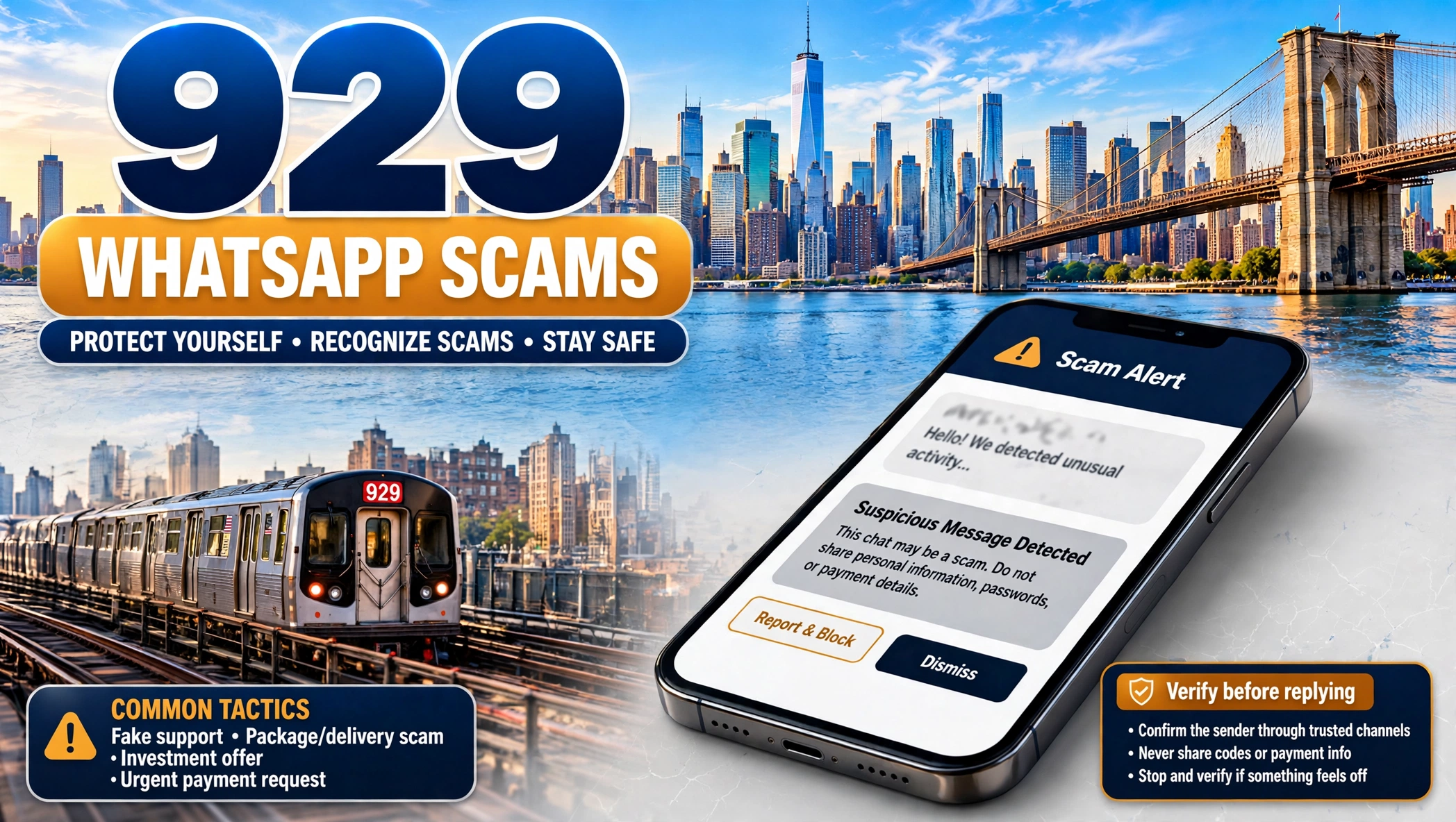
How 929 WhatsApp Scams Usually Unfold
The wrong number opening
Many WhatsApp scams begin exactly like scam texts, with a message meant, supposedly, for someone else. A question about a meeting, a property, a photo shoot or a delivery gets the conversation started. When you say the number is wrong, the sender apologises gracefully, introduces themselves with a polished profile, and keeps chatting. That accident was planned. The goal is a contact who feels chosen and curious rather than targeted.
Romance and friendship building
Over days or weeks, messages become personal and regular. The sender shares a plausible life story, often involving business, travel or work abroad, which conveniently explains why you can never meet in person and why video calls fail or stay brief. Affection and trust are the product being built, because they lower the guard that a direct money request would trigger.
The investment turn
Sooner or later, success enters the story. The sender mentions an investment that is doing well, sometimes crypto or trading, and offers to show you how it works. Small early returns may even appear, inside an app or site the sender recommends, to encourage larger deposits. The platform is controlled by the fraud network, the balances are theatre, and withdrawing real money proves impossible once serious sums go in. This pattern, romance or friendship first and investment second, is one of the most damaging WhatsApp fraud models in circulation.
Impersonation and urgent help
A second family of scams impersonates someone you know or an organisation you trust. A message claims a family member has a new number and needs urgent help, or a supposed employer, official or support agent pushes you toward payments or codes. Urgency and secrecy, pay now and do not call the old number, are the tells. Verify on a channel you already trust before sending anything.
Warning Signs Inside the Chat
You do not need special tools to spot most WhatsApp scams. Watch for these signs, especially in combination.
- An accidental start: a wrong number message that turns into a long, warm conversation with a stranger.
- A perfect profile: glamorous photos, a wealthy lifestyle and a story that explains constant travel.
- Fast intimacy: strong affection, daily attention and future plans within days of first contact.
- Money in any costume: investment tips, trading help, crypto coaching, business opportunities, fees, taxes or release payments.
- Payment by unusual routes: requests involving gift cards, wire transfers or crypto transfers, which are hard to reverse.
- Secrecy: advice to keep the chat or the investment private from family, friends or your bank.
- No real world anchor: meetings never happen, video calls are avoided, and details stay vague while emotions run high.
Any single sign can have an innocent explanation. Several together form a pattern that should end the conversation. Genuine new contacts survive a pause, a video call and independent checking. Scam contacts push back against all three, because delay and verification are what their scripts cannot afford.

What to Do If a 929 WhatsApp Chat Turns Suspicious
Stop sending personal information, photos, codes and above all money. Do not announce that you have spotted a scam if you feel that would escalate things; you can simply stop replying. Use the block and report tools inside WhatsApp for the contact, which cuts the channel and flags the account. If you have already sent money, contact your bank or payment provider immediately using official contact details you look up yourself, keep records of the chat and the transfers, and report the fraud to the Federal Trade Commission and the Federal Communications Commission. State level complaints can also go to the New York Attorney General.
If the sender impersonated someone you know, warn that person and your shared contacts through a route you trust, because the same script is often run on several targets at once. And if a family member later messages from a genuinely new number, agree a simple family code word in advance for emergencies. It takes a minute and defeats the new number, urgent help script outright.
None of this means avoiding WhatsApp or fearing 929 numbers. The code serves millions of New Yorkers across four boroughs, and WhatsApp is how many of them talk to family around the world. It means reading an unsolicited approach the way you would read any stranger at the door: polite, unhurried, and under no obligation to let the conversation in. A local looking number is a costume anyone can wear. Behaviour is what reveals the wearer.
Back to 929 Complete GuideFrequently Asked Questions
Why am I getting WhatsApp messages from a 929 number I do not know?
Scammers use or spoof New York numbers because a local code builds trust. A common opening is a wrong number message that turns into a long friendly chat. If you did not expect the contact, treat it as unverified.
What is the WhatsApp romance and investment scam?
A sender builds a friendship or romance over days or weeks, then introduces an investment or crypto opportunity on a platform they recommend. The platform and its returns are fake, and withdrawals fail once real money is deposited.
Can a WhatsApp profile photo or name prove a 929 contact is real?
No. Names and photos are chosen by the account holder and can be stolen or invented. Judge a contact by behaviour, and verify identity through channels you already trust.
What should I do if a 929 WhatsApp contact asks for money?
Do not send it. Stop the conversation, block and report the contact inside WhatsApp, and if money was already sent, contact your bank at once and report the fraud to the Federal Trade Commission.
A message says a family member has a new 929 number and needs help. What should I do?
Do not pay or share codes based on the message alone. Contact the family member on their old number or through another trusted route and confirm directly before doing anything.
Is every 929 number on WhatsApp a scam?
No. 929 is a legitimate code used by millions of people in Brooklyn, Queens, the Bronx and Staten Island. The risk is in unsolicited approaches that build fast trust and turn toward money or secrecy.